A New Paradigm For In Custody Patient Care: Addressing Carceral Creep In Hospitals
Report Introduction
With nearly 2 million people incarcerated on any given day, the United States’ predilection for punishment is unique across all democratic nations...The healthcare system does not lie outside of the carceral system but is deeply intertwined, with incarcerated patients requiring care in community clinics and hospitals each day.
We conducted a community-based interview project with previously incarcerated individuals who had experienced healthcare outside of carceral facilities to obtain firsthand patient perspectives…A combination of patient and provider perspectives were used to create a framework for system-wide and provider-specific changes to implement. While not exhaustive, we view these changes as practical next steps towards transforming both individual providers and healthcare systems' relationship to carceral systems.
We hope this report will help catalyze the ideological and structural changes that are necessary to end the encroachment of carceral practices, infrastructure, and policies - what we call carceral creep - into our hospitals.
Defining Carceral Creep
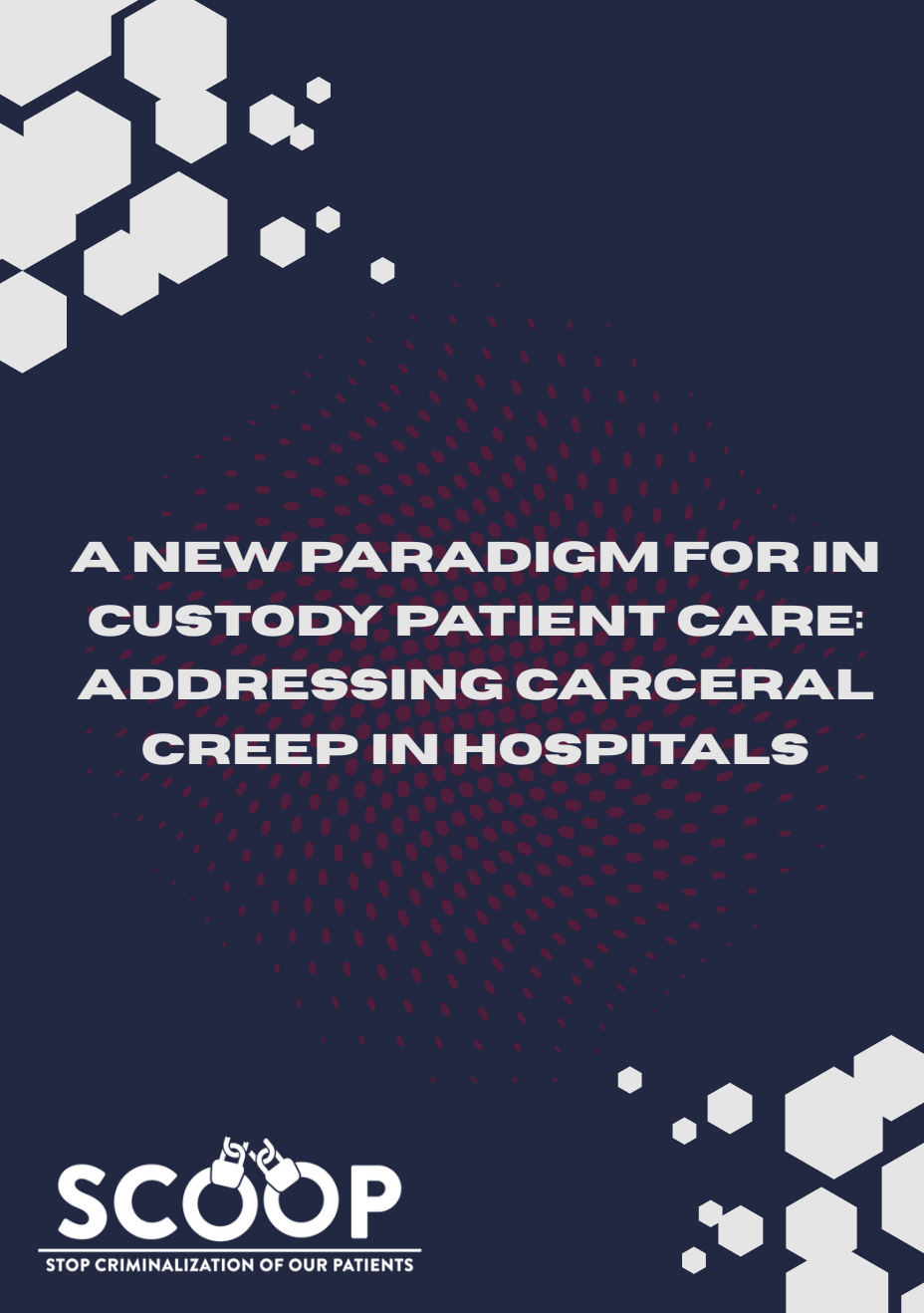
Carceral creep describes the process by which carceral policy, personnel, and infrastructure expand into areas of public and private life with little to no debate. It is a pernicious process that takes place without much discussion, evaluation of evidence, or consideration of harms. Carceral creep ensures that slowly but surely all spaces morph into areas of surveillance and control, accompanied by an ever looming threat of state sanctioned violence. In American hospitals, carceral creep can be seen in the troubling trend of increased security infrastructure and personnel alongside an institutional policy landscape that is overwhelmingly deferential to carceral agencies.
Analysis of Formerly Incarcerated Individuals’ Experiences with Healthcare Systems While in Custody